
Health & Nutrition
Oat Milk vs. Soy Milk vs. Dairy: Which Should You Choose?
Walk into any major Kenyan supermarket today and you will find something that would have been unimaginable a decade ago: an entire section dedicated to plant-based milk alternatives. Oat drinks, soy milks, almond milks, and coconut milks sit alongside traditional dairy products, each claiming to be the best choice for your health and your family.
The variety is wonderful. The confusion is real. How do you compare these products meaningfully? Which one gives you the best nutritional value? Which one works in your chai? Which one is suitable for your children?
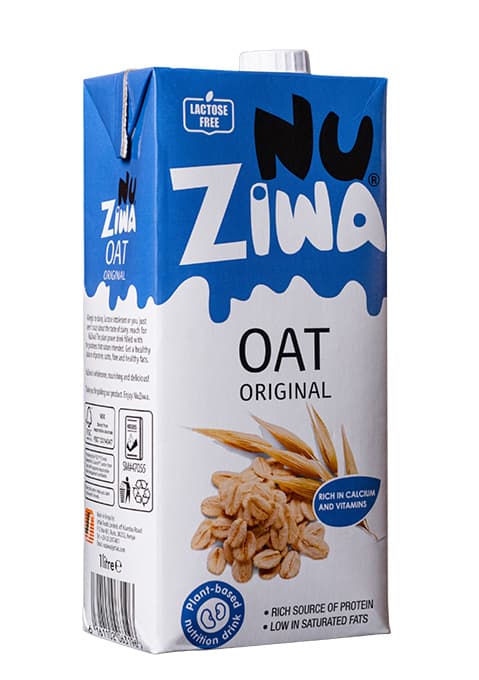
At Jetlak Foods, we make NuZiwa, a plant-based oat drink manufactured in Ruiru, Kenya. We obviously believe in our product, but we also believe in informed consumers. This guide compares oat drinks, soy milk, and dairy milk honestly, using nutritional data, published research, and practical considerations relevant to Kenyan households.
Nutritional Comparison: The Numbers
Let us start with the data. The following comparison uses values from the USDA FoodData Central database (2023) for standard commercial products per 250ml serving.
Whole Dairy Milk (250ml): approximately 150 calories, 8g protein, 8g fat, 12g carbohydrates, 12g sugar (naturally occurring lactose), 300mg calcium (30% daily value), naturally contains vitamins A, D, B12, and riboflavin.
Unsweetened Soy Milk (250ml): approximately 80 calories, 7g protein, 4g fat, 4g carbohydrates, 1g sugar, typically fortified with calcium (300mg) and vitamins D and B12.
Oat Drink (250ml): approximately 120 calories, 3g protein, 5g fat, 16g carbohydrates, 7g sugar (naturally occurring from oats), typically fortified with calcium (350mg) and vitamins D and B12.
Each option has a different nutritional profile. There is no single "best" choice that applies to everyone. The right choice depends on your specific nutritional needs, dietary preferences, taste preferences, and budget.
Protein Content
Dairy milk and soy milk lead clearly in protein content. With 7 to 8 grams per serving, they provide a meaningful contribution to daily protein needs. Oat drinks typically contain 2 to 4 grams per serving.
For growing children, pregnant women, and anyone actively concerned about protein intake, this difference matters. If you switch from dairy to an oat drink, you should make up the protein gap through other dietary sources like eggs, legumes, peanut butter, or meat.
A study published in the Journal of Food Science and Technology (Sethi et al., 2016) conducted a comprehensive nutritional comparison of plant-based milks and concluded that soy milk was the closest nutritional equivalent to dairy milk, primarily due to its protein content.
Calcium and Bone Health
Calcium is the nutrient most people associate with milk, and rightly so. Adequate calcium intake is vital for bone development in children and bone maintenance in adults.
All three options can provide comparable calcium levels, but there is an important distinction. Dairy milk contains calcium naturally. Soy milk and oat drinks contain calcium only if they are fortified. Always check the label to confirm that the plant-based product you are buying has been fortified with calcium.
NuZiwa oat drink is fortified with calcium and vitamins to ensure it provides comparable micronutrient value to dairy milk. Not all plant-based drinks on the Kenyan market are fortified, so this is something to verify before purchasing.
The Lancet Diabetes & Endocrinology journal (2019) published a review stating that calcium intake below 400mg per day is associated with increased fracture risk, particularly in postmenopausal women. The recommended daily intake for adults is 1,000mg (1,200mg for women over 50). Three servings of dairy milk or fortified plant-based drinks can provide 900 to 1,050mg, covering most of that requirement.
Lactose Intolerance: A Major Factor in Kenya
One statistic surprises many people. According to genetic and epidemiological research, including data cited by the National Institutes of Health (NIH), approximately 70 to 80% of adults in East Africa have some degree of lactose malabsorption. This means their ability to digest lactose (the sugar in dairy milk) decreases after childhood.
Not everyone with lactose malabsorption experiences noticeable symptoms. Many people can tolerate moderate amounts of dairy without discomfort. However, for those who experience bloating, gas, cramps, or diarrhoea after consuming dairy, plant-based alternatives like oat drinks and soy milk provide a comfortable solution.
This is one of the primary reasons we developed NuZiwa. For Kenyans who love their chai but find that dairy milk disagrees with their stomachs, an oat-based drink provides the creaminess and taste they want without the lactose.
Taste and Culinary Performance
This is where personal preference plays the largest role, and where oat drinks have a genuine advantage.
Oat drinks have a naturally mild, slightly sweet flavour and a creamy texture that closely mimics whole milk. They perform well in hot beverages (tea, coffee), in cooking (sauces, baking), and in cereal. Most people who try oat drink in their chai find the transition comfortable.
Soy milk has a distinct bean-like flavour that some people enjoy and others find off-putting. It works well in smoothies and baking but can taste unusual in traditional Kenyan tea.
Dairy milk, of course, is the benchmark that most Kenyans have grown up with. Its taste is familiar, comforting, and deeply embedded in culinary culture.
Environmental Considerations
The environmental footprint of different milks has become a significant factor for many consumers globally. A landmark study by Poore and Nemecek, published in Science (2018), compared the environmental impact of dairy and plant-based milks across three dimensions: greenhouse gas emissions, land use, and water use.
Their findings showed that producing one litre of dairy milk generates approximately 3.2 kg of CO2 equivalent emissions, uses approximately 9 square metres of land, and requires approximately 628 litres of water.
By comparison, one litre of oat drink generates approximately 0.9 kg of CO2 equivalent emissions, uses approximately 0.8 square metres of land, and requires approximately 48 litres of water.
Soy milk falls between the two, with approximately 1.0 kg CO2 equivalent, 0.7 square metres of land, and 28 litres of water per litre.
The differences are substantial. For environmentally conscious consumers, plant-based options have a clear advantage.
Cost Comparison in Kenya
In the Kenyan market, dairy milk remains the most affordable option per litre, particularly fresh pasteurised milk from local processors. Plant-based alternatives tend to carry a price premium, though this has been decreasing as production scales up and more local manufacturers enter the market.
NuZiwa, as a locally manufactured oat drink, is priced more competitively than imported plant-based alternatives. However, we are transparent about the fact that it currently costs more per litre than basic dairy milk. As the plant-based category matures in Kenya and production volumes increase, we expect this gap to narrow.
For consumers managing tight budgets, dairy milk remains excellent value. For those willing to pay a modest premium for the lactose-free and environmental benefits of a plant-based option, oat drinks offer strong value, especially when compared to imported alternatives.
Which Should You Choose
For families with no dietary restrictions who want the most nutritionally complete and affordable option, dairy milk remains an excellent choice. It is protein-rich, calcium-rich, and deeply familiar.
For individuals with lactose intolerance or sensitivity, oat drinks and soy milk are both strong options. If protein is a priority, soy milk edges ahead. If taste and versatility are priorities, oat drinks tend to win.
For environmentally motivated consumers, plant-based options are clearly superior in terms of carbon, land, and water footprint.
For children, consult your paediatrician before making significant changes to their milk intake. Growing children need adequate protein, calcium, and fat. If you choose a plant-based alternative, ensure it is fortified and supplement the protein through other dietary sources.
The Blended Approach
Many Kenyan households are finding that the best approach is not choosing one option exclusively, but blending. Dairy milk for the children's cereal. NuZiwa oat drink in the parents' afternoon tea. Soy milk in the weekend smoothie. Nuteez peanut butter on toast for protein regardless of which drink is in the glass.
At Jetlak Foods, we are not trying to replace dairy. We are trying to give Kenyan consumers more options, made locally, priced fairly, and backed by transparent nutritional information. NuZiwa is our contribution to a more diverse Kenyan breakfast table.
Whatever you choose, choose it because you understand the nutritional facts, not because of marketing claims on the front of the carton. Read the label. Compare the numbers. Make the choice that works for your family.