
Our Story
From Farm to Family: How Jetlak Sources Peanuts Directly from Kenyan Farmers
Behind every jar of Nuteez peanut butter is a story that begins in the red soil of Kenyan farms. It is a story about relationships, quality, fairness, and the belief that how you source your ingredients matters just as much as how you process them.
Jetlak Foods has been manufacturing in Kenya since 1994. For the first decade of Nuteez production, we sourced peanuts the way most Kenyan manufacturers did: through a chain of middlemen, brokers, and aggregators. The peanuts arrived at our Ruiru factory, and we had limited visibility into where they came from, who grew them, or how they were handled after harvest.
That system had problems. Quality was inconsistent. Traceability was poor. And the farmers who actually grew the peanuts received a fraction of the final price. According to the FAO's 2020 report on groundnut value chains in East Africa, smallholder farmers in Kenya typically received only 25 to 35% of the consumer price when selling through traditional middlemen networks. The rest was absorbed by transport, storage, brokerage fees, and multiple layers of markup.
We knew we could do better.
The Decision to Go Direct
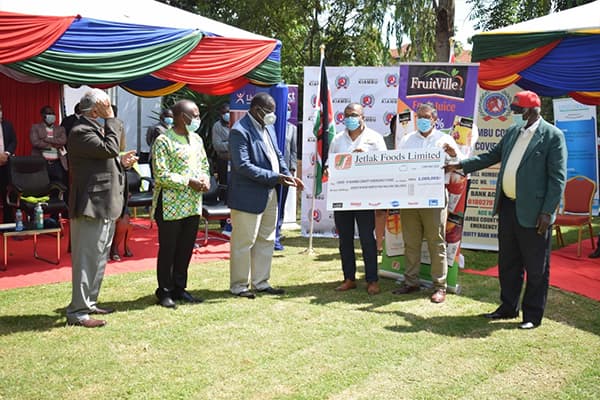
In 2018, Jetlak Foods began restructuring our peanut supply chain with the support of the AgriFI Kenya Challenge Fund, a programme co-funded by the European Union and the Kenyan government. The AgriFI programme was designed to support agribusinesses that invest in smallholder farmer integration. Through this partnership, we developed a direct-sourcing model that connects Jetlak Foods with peanut farming cooperatives across several Kenyan counties.
The shift was not simple. Direct sourcing requires investment in farmer training, quality assurance at the farm level, storage infrastructure, and logistics. But the benefits, for our company, for our customers, and most importantly for the farmers themselves, have been significant.
How the Direct-Sourcing Model Works
Our supply chain operates in four stages.
The first stage is farmer selection and training. We work with cooperatives in peanut-growing regions, primarily in Western Kenya, Nyanza, and parts of the Eastern region. Before the planting season, our agronomists visit the cooperatives to provide training on good agricultural practices. This includes proper planting density, pest management, and most importantly, post-harvest handling and drying techniques.
Proper drying is critical because it directly affects aflatoxin levels (more on this in our separate article on aflatoxin and peanut butter quality). Peanuts that are dried too slowly or stored in humid conditions can develop dangerous levels of aflatoxin contamination. Our training programme teaches farmers the Purdue Improved Crop Storage (PICS) method, which uses hermetically sealed bags to prevent moisture re-absorption and pest damage during storage.
The second stage is harvest and collection. At harvest time, Jetlak Foods sends collection agents to the cooperatives. We purchase peanuts directly from the farmers at pre-agreed prices. These prices are typically 15 to 20% higher than what the farmers would receive from middlemen, because we are eliminating the intermediary layers.
The third stage is quality testing. Every batch of peanuts undergoes testing at our Ruiru facility before it enters production. We test for moisture content, aflatoxin levels, physical defects, and oil content. Batches that do not meet our standards are rejected. This is non-negotiable. The testing protocol is aligned with KEBS KS 648:2019, the Kenyan standard for raw groundnuts.
The fourth stage is processing and manufacturing. Peanuts that pass quality testing are roasted, ground, and processed into Nuteez peanut butter. Our facility uses modern processing equipment that maintains consistent texture and flavour while operating under HACCP (Hazard Analysis and Critical Control Points) food safety standards.
Impact on Farmers
Between 2018 and 2025, our direct-sourcing programme has worked with over 2,500 smallholder farmers across six Kenyan counties. The average farm size is between one and three acres, and peanuts are typically grown alongside maize, beans, or sorghum in a rotation system.
The price premium we pay has a meaningful impact. For a farmer cultivating two acres of peanuts with an average yield of 800kg per acre (the Kenya Agricultural and Livestock Research Organisation, KALRO, reports average Kenyan groundnut yields of 600 to 1,000 kg per hectare), the difference between our price and the middleman price can amount to KES 15,000 to 25,000 of additional income per season. For a smallholder family, that money pays school fees, buys farming inputs for the next season, or covers medical expenses.
Beyond the price premium, farmers in our programme benefit from the agronomic training, which improves their yields over time, and from the certainty of having a committed buyer. Many smallholder farmers face the risk of growing a crop and then having no reliable market for it. Our pre-season agreements remove that uncertainty.
Impact on Quality
The quality improvements have been dramatic. Before the direct-sourcing model, we rejected approximately 12% of incoming peanut batches due to quality issues, primarily high moisture and aflatoxin levels. After implementing the programme with its farmer training and proper drying protocols, our rejection rate has dropped to under 4%.
This matters for you as a consumer because it means the peanuts in your jar of Nuteez have been through a rigorous, traceable supply chain. We know which cooperative grew them, when they were harvested, how they were dried, and how they tested at intake.
The Broader Opportunity for Kenyan Manufacturing
Kenya produces approximately 120,000 metric tonnes of groundnuts annually, according to FAOSTAT (2022 data). A significant portion is consumed at the household level or sold through informal markets. The formal processing sector, which includes peanut butter manufacturers, absorbs a relatively small share of total production.
There is enormous potential for Kenyan manufacturers to source more locally rather than importing. For the peanut butter category specifically, local sourcing reduces costs (no import duties or forex risk), supports the domestic agricultural economy, and provides supply chain resilience.
At Jetlak, we have proven that direct-to-farm sourcing at scale is commercially viable in Kenya. It requires upfront investment and ongoing commitment, but it delivers better raw materials, stronger farmer relationships, and a product story that consumers genuinely value.
What You Can Do
When you buy Nuteez, you are not just buying peanut butter. You are supporting a supply chain that puts money directly into the hands of Kenyan farming families. You are choosing a product whose ingredients are traceable from field to jar. And you are voting with your shillings for a model of manufacturing that invests in local agriculture rather than extracting from it.
We are proud of what we have built. We are also honest about the fact that it is a work in progress. We continue to expand the number of cooperatives in our programme, improve our training materials, and explore ways to offer even better prices to farmers.
The journey from farm to family is not always smooth, but it is always worth taking. Every jar of Nuteez carries that journey inside it.